
Discover the partnership websiteLiving Atlas of Quality
 18 August 2026
Compton's Cafeteria Case study Drawing
| Resource type |  |
| Author | Renee Li |
| Copyright owner | Nighttime Design |
| Type of viewpoint | Researcher |
| Language | English |
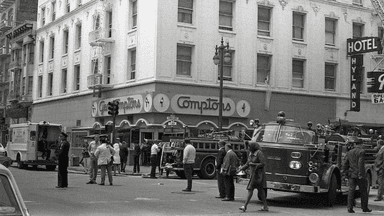
In the 1950s and 60s, San Francisco’s Tenderloin district was a red-light district populated mainly by working-class people of colour, sex workers, substance users, and LGBTQ people. It was one of the few areas where visibly queer individuals could secure housing or make a living, often in the form of single-room occupancy hotels and sex work. Compton’s Cafeteria was a 24-hour chain diner in the center of the Tenderloin district right beside several of these low-cost hotels, clubs, and main drags, and thus became an important gathering place for trans women, drag queens, and other gender non-conforming individuals after going out or working nights. The site has also become an enduring and evolving place of protest.

In the 1950s and 60s, San Francisco’s Tenderloin district was a red-light district populated mainly by working-class people of colour, sex workers, substance users, and LGBTQ people. It was one of the few areas where visibly queer individuals could secure housing or make a living, often in the form of single-room occupancy hotels and sex work. Compton’s Cafeteria was a 24-hour chain diner in the center of the Tenderloin district right beside several of these low-cost hotels, clubs, and main drags, and thus became an important gathering place for trans women, drag queens, and other gender non-conforming individuals after going out or working nights. The site has also become an enduring and evolving place of protest. Written by Renee Li.
