Discover the partnership websiteLiving Atlas of Quality

 Publication:16 September 2025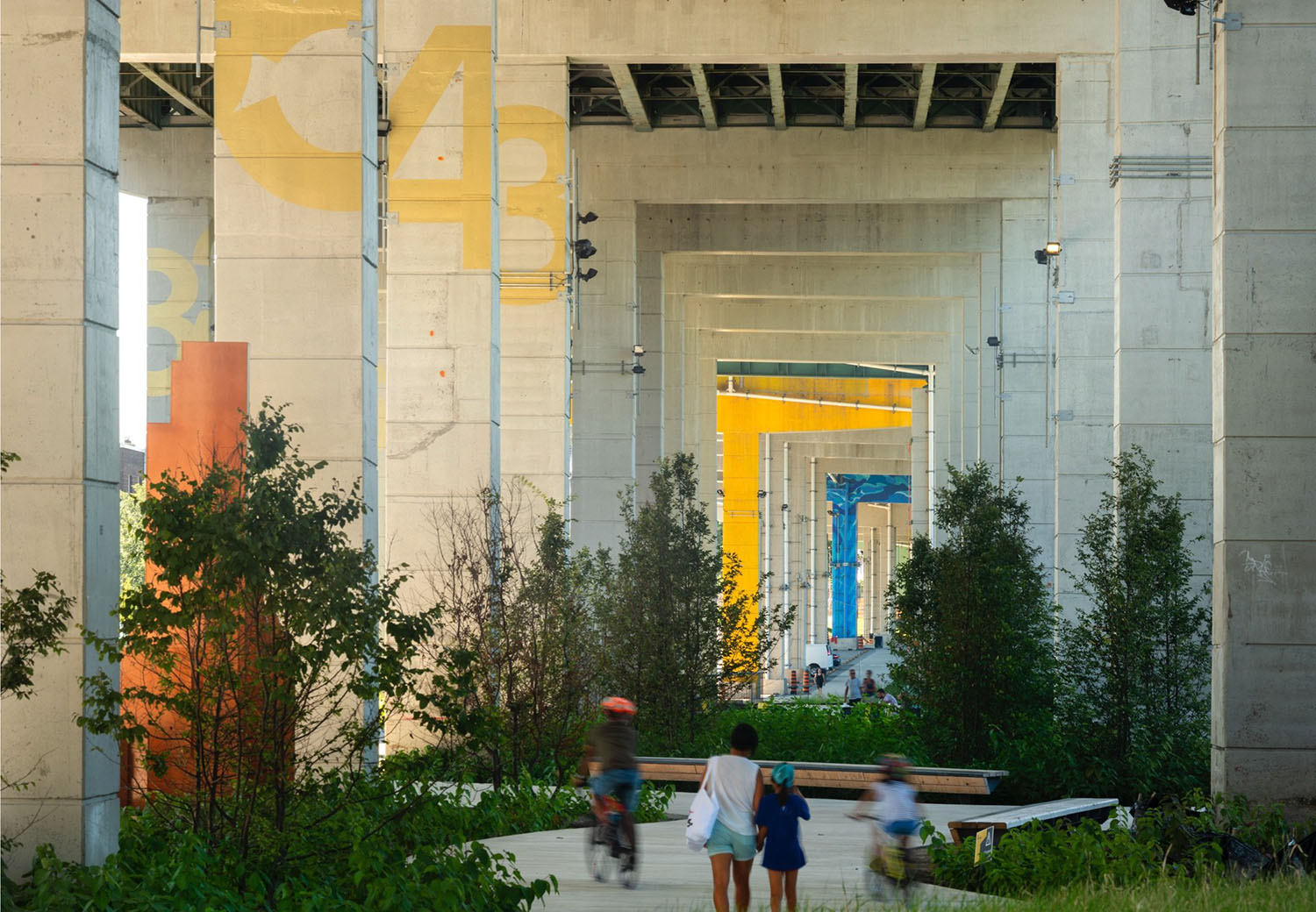
| Location | Canada|Ontario|Toronto |
| Typologies | Landscape urban design and planning|Public spaces, streets and squares |
2019 Concevoir des infrastructures inclusives_TMU_#32
Illustrated research presentation by PhD student Yaxin Jiang on "Designing Inclusive Infrastructure: A Mixed-Methods Architectural Design Research Approach to Inclusive Public Spaces" at the annual meeting of the Society for the Study of Architecture in Canada (SSAC) in May 2026 in St John New Brunswick in the session "Architectural Research for Emerging Futures: Critical Reflections on Methods" co-organized and co-moderated with Dr. Terri Peters from Toronto Metropolitan University.
 De l'autoroute à l'espace public : retracer le processus de réutilisation des infrastructures au Bentway, à Toronto_TMU_#25
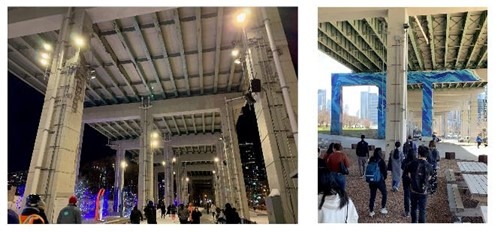
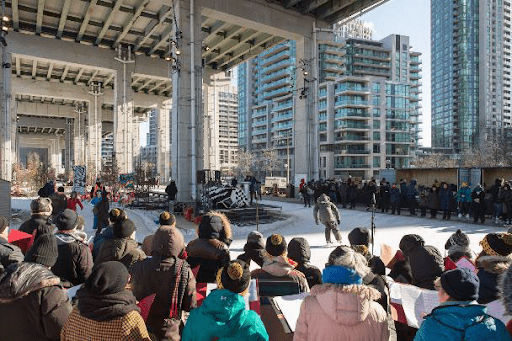
Across many cities, underused infrastructural spaces are being reimagined as public spaces. This shift raises important questions about how design and planning processes shape the ways inclusive spaces are envisioned and implemented within urban regeneration. Actor–Network Theory provides a useful framework for understanding design not as a linear procedure, but as a networked social process, helping to reveal the relationships among both human and non-human actors, including community members, civic organizations, designers, consultants, policy documents, drawings, infrastructures, and natural environments. Focusing on The Bentway in Toronto, this research uses ANT-inspired mapping to examine how community needs, design consultations, and infrastructural conditions interact in the transformation of spaces beneath and beside the Gardiner Expressway. The mapping shows how civic organizations can lead design consultation and public programming as processes of network-building, bringing together multidisciplinary actors to respond to spatial, technical, social, and political constraints. Through iterative cycles of public engagement and public installation, situated spatial knowledge becomes inscribed in materials such as drawings, models, and diagrams. This is especially important for underused infrastructure sites, which often lack accessible documentation, precise measurements, or shared spatial references. These materials can function as boundary objects, supporting dialogue and decision-making among consultants, community groups, and stakeholders. They can also help designers and artists define the scope, constraints, and potential of future design installations and art programs, which can further extend the network by mobilizing shared visions and creating new opportunities for public involvement. Presented at the Environmental Design Research Association’s EDRA57 conference in Amherst, Massachusetts, May 27–30, 2026, as part of the Digital Media Shorts program.
 Favoriser la collaboration et une culture de la création : les enseignements tirés d'un atelier vertical avec des étudiants de premier cycle_TMU_#22
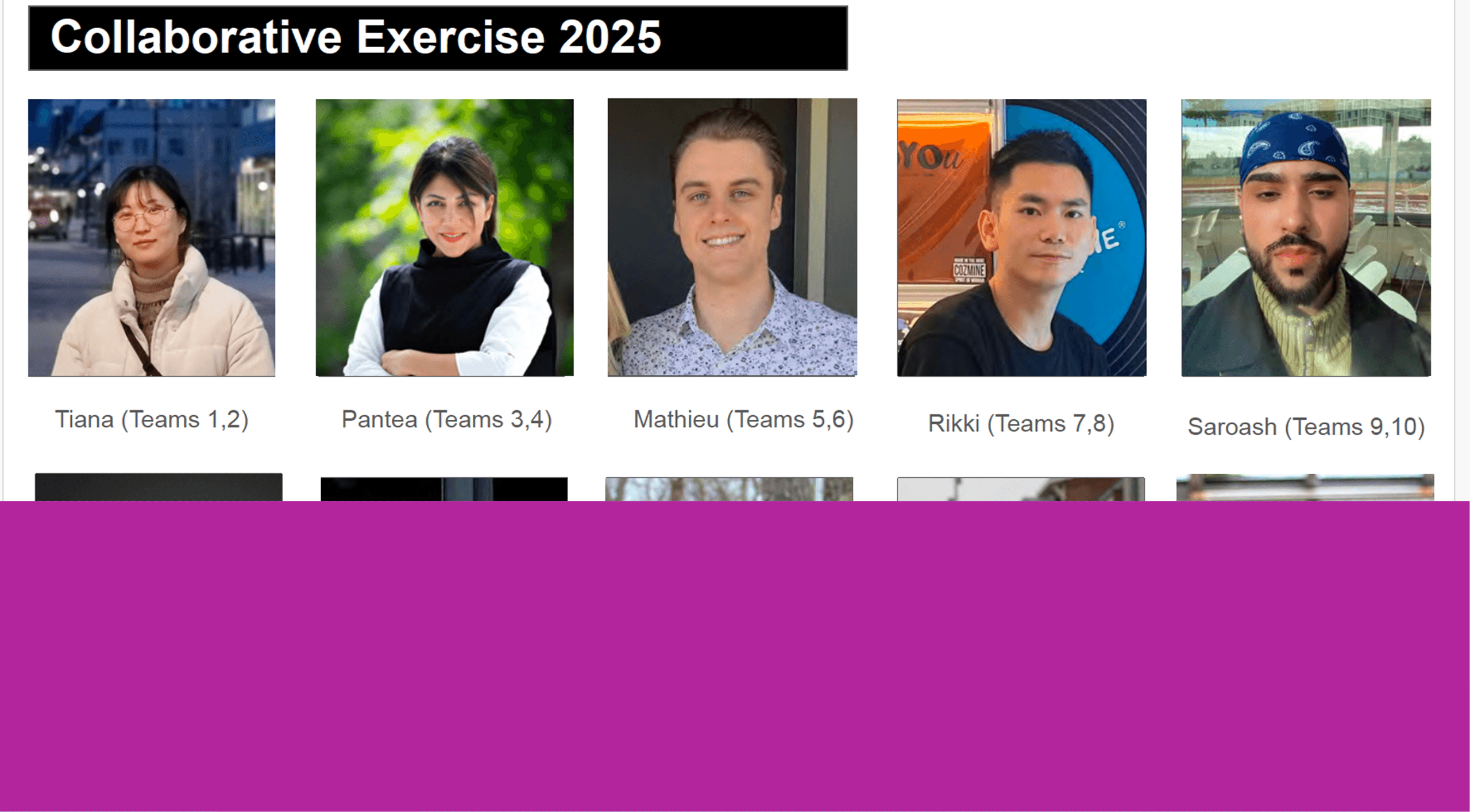
Illustrated research presentation by Terri Peters, “Fostering Collaboration and a Culture of Making: Learning from a Vertical Workshop with Undergraduate Students.” Presented at the Society for the Study of Architecture in Canada Annual Conference, Ottawa, May 27–30, 2025.
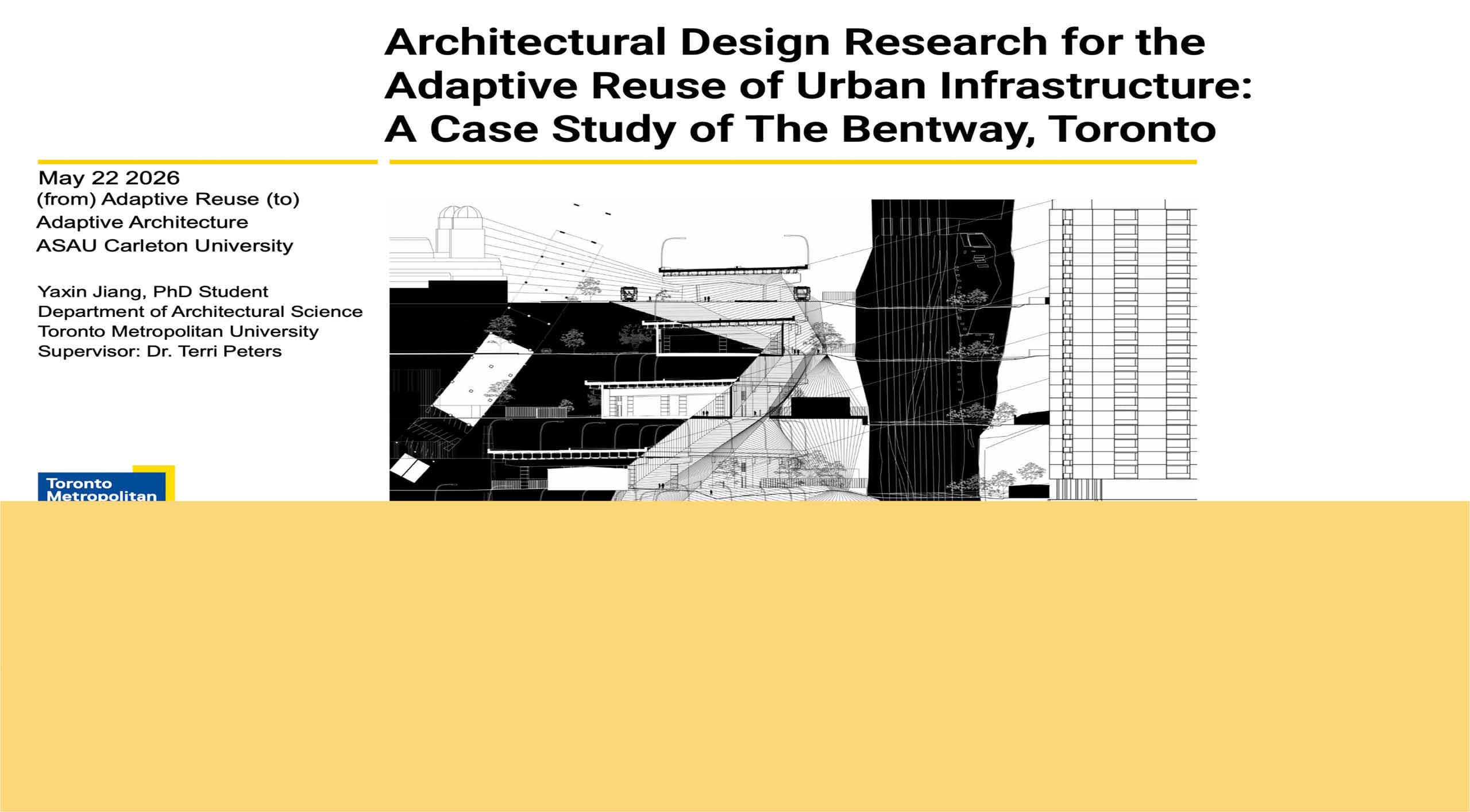 Recherche en conception architecturale pour la réutilisation adaptative des infrastructures urbaines : une étude de cas sur The Bentway, Toronto_TMU_#19
Underused transportation infrastructure often occupies strategic urban sites but lacks a clear architectural identity. Its scale, ambiguity, and existing material conditions challenge conventional design approaches and call for more exploratory forms of inquiry during the pre-design phase. Using a design research approach, this paper examines how architectural design research can serve as a mode of inquiry for identifying adaptive reuse potential and developing new design strategies for underused urban infrastructure. It was presented at the International Symposium: From Adaptive Reuse to Adaptive Architecture at Carleton University in Ottawa, Ontario, Canada, on May 22, 2026.
 Représentation architecturale pour la phase préliminaire de réutilisation des infrastructures urbaines_TMU_#7
Starting in Fall 2024, our researchers partnered with the Bentway Conservancy, a non-profit organization dedicated to promoting the Gardiner Expressway’s potential as a public space at street level, for a six-month research collaboration funded by MITACS. Innovative methods are developed to enhance feasibility studies and public engagement during the pre-design phase. These methods include multi-layered 3D drawings and strategic precedent mapping, designed to address the challenges of representing complex urban conditions. The goal is to enable more effective dialogue among stakeholders around inclusive design and public space quality. By Terri Peters and Yaxin Jiang
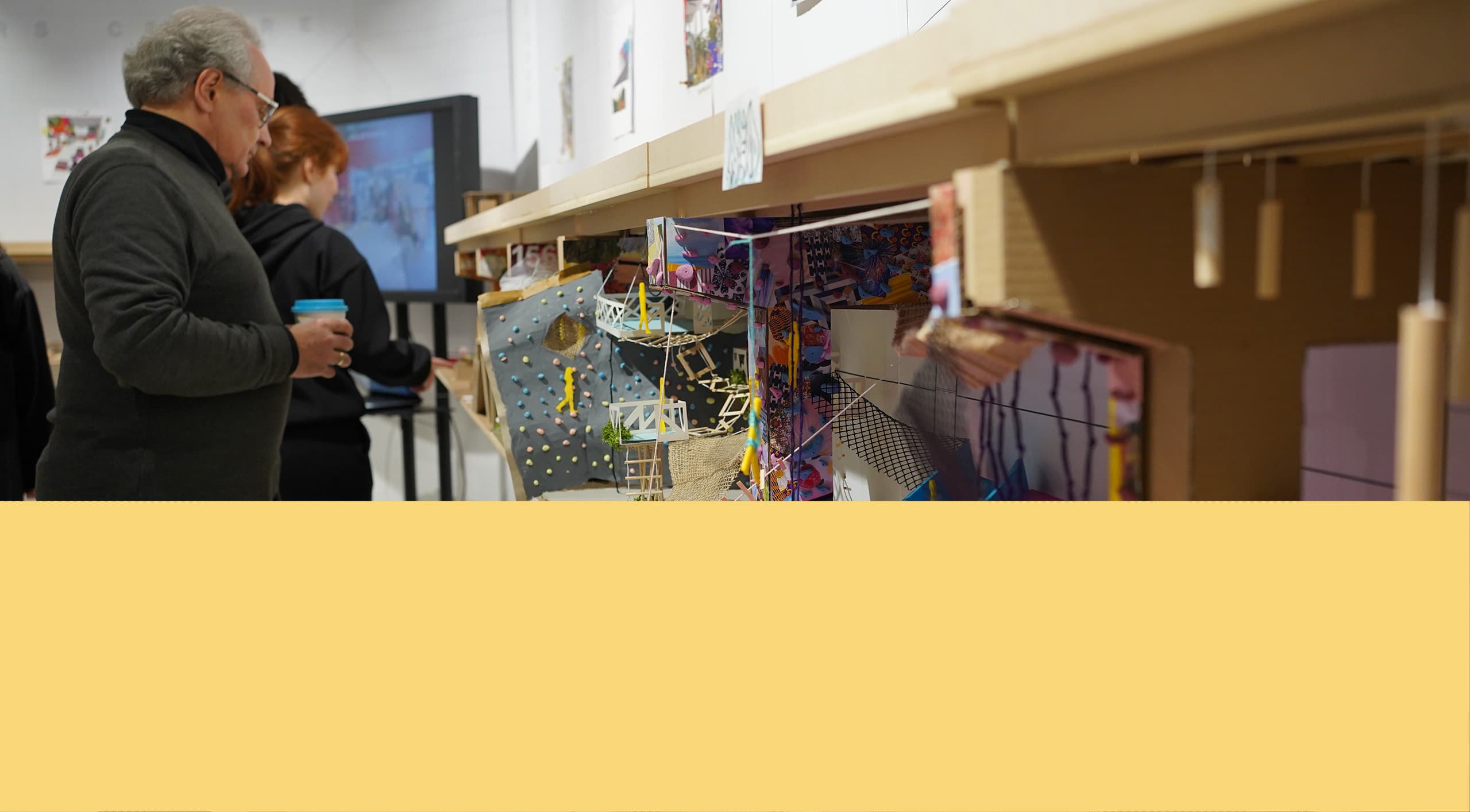 Histoires du front de mer : exposition sur un projet collaboratif en 2025_TMU_#4
Every year, Toronto Metropolitan University holds a week-long ‘vertical studio’ for students in the undergraduate architecture program. In 2025, TMU Professor Terri Peters led the event, and student teams proposed new designs for the spaces under the Gardiner Expressway near Toronto’s waterfront. Students reimagined the left- over areas at two scales using physical model making: the city (at 1:100) and the urban room (at 1:25). Numerous proposals were collaboratively developed for vibrant and connected social spaces including for food markets and dining; zones for play, climbing, and skateboarding; areas for animals, nature and agriculture; and pedestrian pathways linking the Under Gardiner as a new public park focused on quality experiences in the built environment. The project was presented at the peer-reviewed conference SSAC in May 2025 and published here https://thebentway.ca/stories/waterfront-stories-tmu-collaborative-studio/ By Terri Peters and Yaxin Jiang