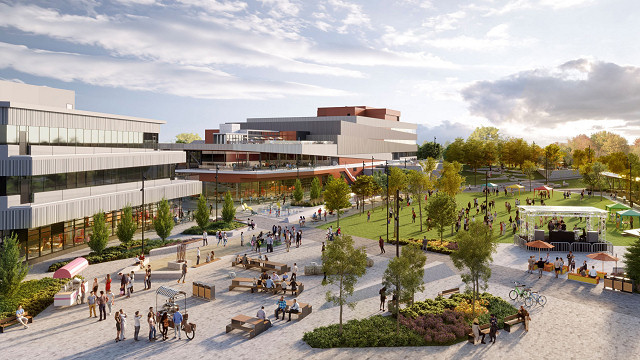
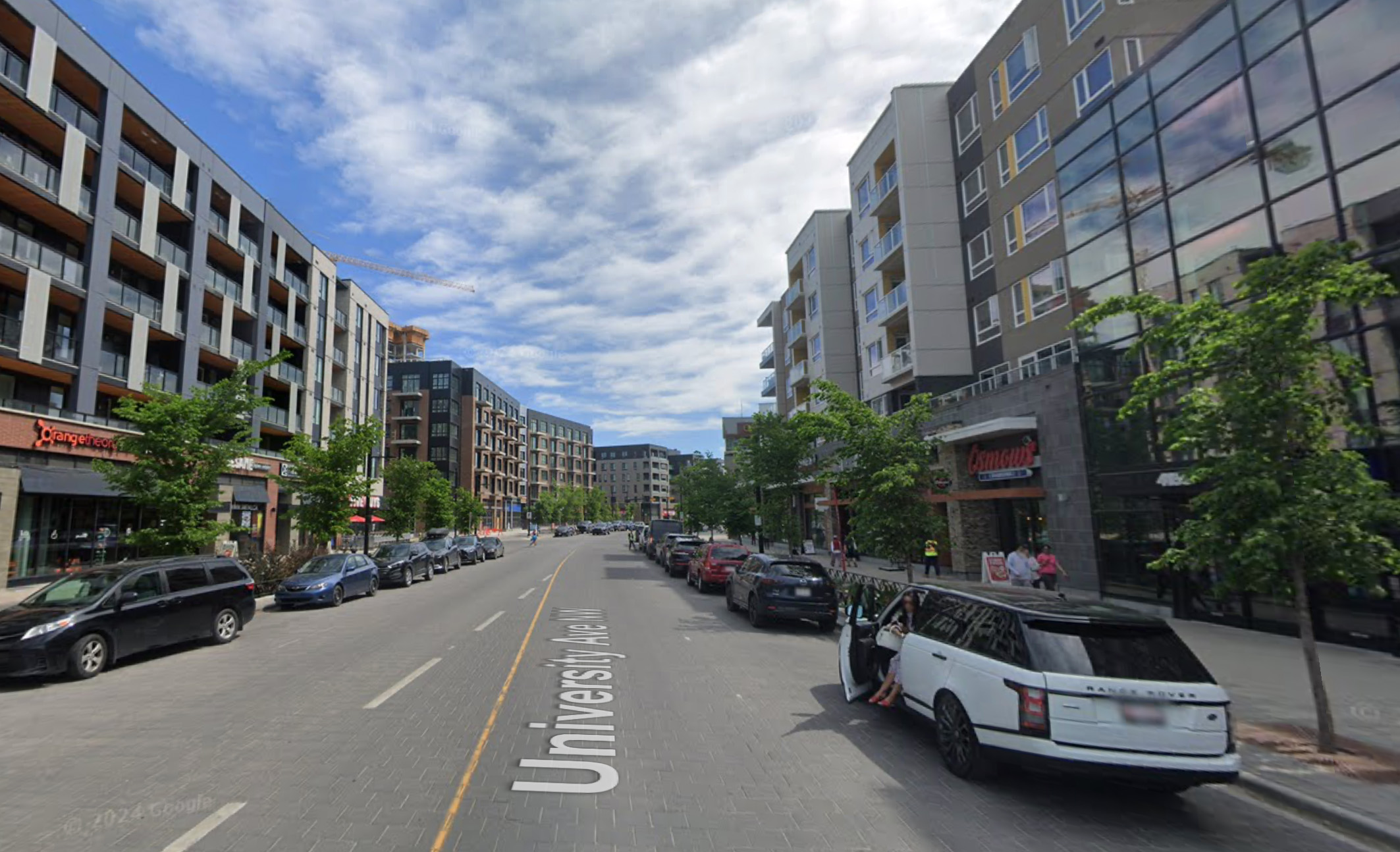
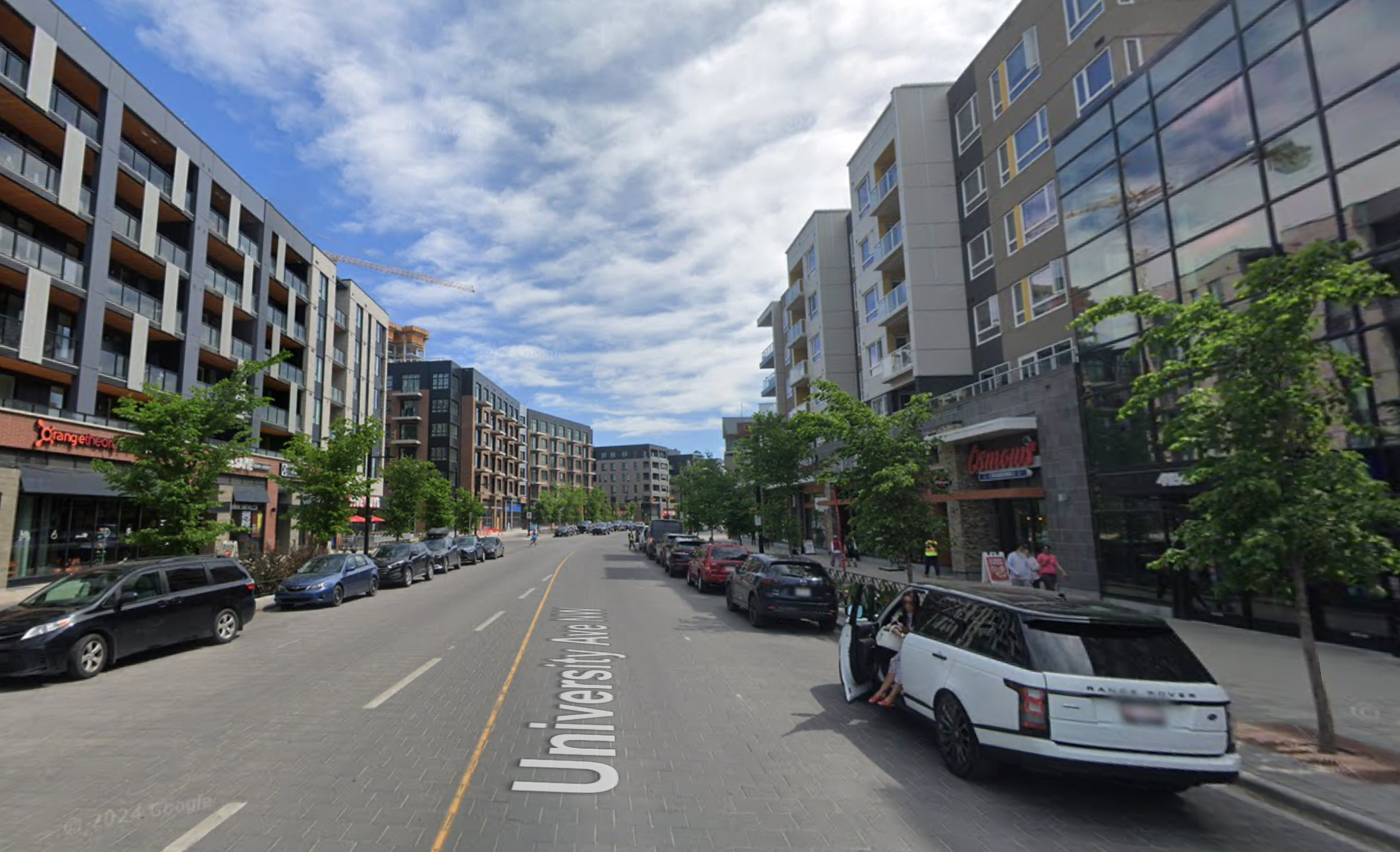
"I experience the University District as a place that feels more complete and intentional compared to other areas. When I compare it to places like 17th Avenue, which can feel chaotic, this one feels more organized and more comfortable.
It has similarities to Aspen Landing in how it balances movement and staying. You can walk around, spend time, and engage with the space in different ways. It does not feel overwhelming.
For me, it stands out as a stronger example of how a district can be put together in a way that supports everyday experience without feeling too busy or fragmented."
(Adapted from interview material. Edited for clarity while preserving the participant’s voice.)
"I experience the University District as a place where you can really see what happens when community input is part of the process from the very beginning. The project started with a visioning phase, and the community was involved from step one. There was a lot of back and forth as the master plan developed.
What stands out is that the professional team brought the design solutions, and the community brought lived experience, and instead of those things conflicting, they were integrated together. That is something you can feel when you are there.
Another important part is that it did not stop at the master plan. It went into layers of detail, with strong design guidelines and requirements. So it is not just zoning or policy; everything was carried through into implementation. That attention to detail affects how people actually experience the space when they walk through it.
For me, the experience of the place comes from that. It feels thought through, not just at a high level, but in the everyday details. You can sense that it was carefully shaped to create a human experience, not just a development."
(Adapted from interview material. Edited for clarity while preserving the participant’s voice.)

 Publication:1 May 2026