
Découvrez le site du partenariatAtlas vivant de la qualité

 Publication:17 août 2026
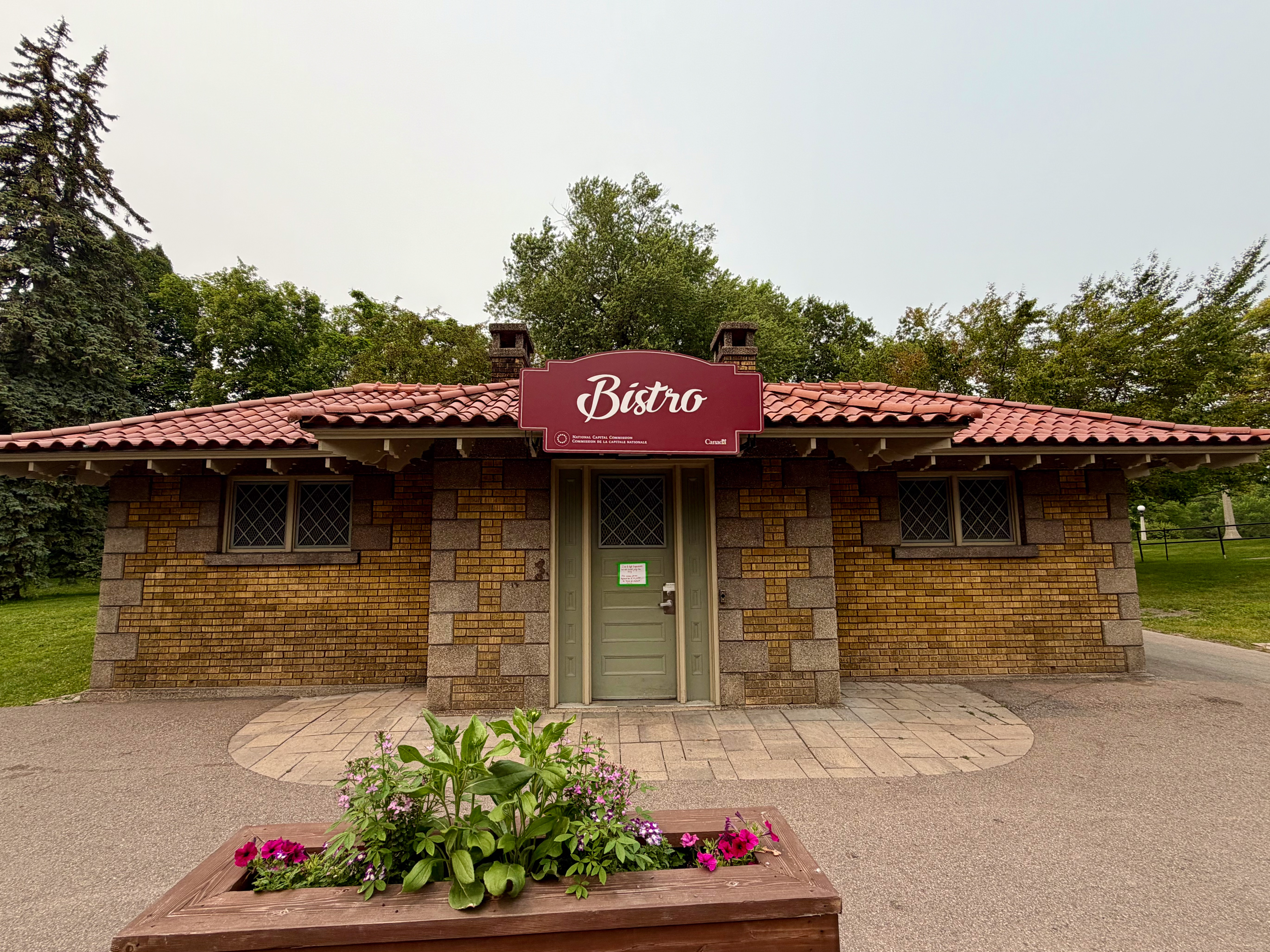
The original Patterson Creek Pavilion was built in 1923 at a time when the Ottawa Improvement Commission (later the NCC) was starting to reshape the Rideau Canal into a more public and recreational landscape. Its location at the mouth of Patterson Creek, where the water funnels into parkland, was intentionally chosen to give the building a quiet but useful presence. The original design relied on durable materials and simple symmetrical massing that expressed civic character suitable for its park setting. The pavilion went on to be registered as a Recognized Federal Heritage Building in 1994. The City of Ottawa, in collaboration with the NCC and federal heritage authorities, undertook a full rehabilitation in 2006. This work focused on restoring the pavilion’s deteriorated materials and was awarded a Certificate of Merit in Restoration. The project also brought the building up to modern building standards by upgrading mechanical systems and improving accessibility whilst still being careful not to alter its overall form. Another rehabilitation in 2019 adapted the pavilion into a small seasonal bistro that operates during warmer months. The intervention respects the historical fabric of the pavilion by fitting the kitchen and service components within the existing structure with all new elements designed to be reversible and visually unobtrusive. The bistro has helped revive the structure, bringing more consistent public use to a building that historically served as a shelter and seasonal amenity.
| Lieu | Canada|Ontario|Ottawa |
| Numéro et nom de rue | Linden Terrace, Ottawa |
| Typologies | Architecture commerciale fiscale et de bureaux|Restaurants, bars et boîtes de nuit |
| Type de projet | Transformation |
| Date de fin | 1 janvier 2019 |
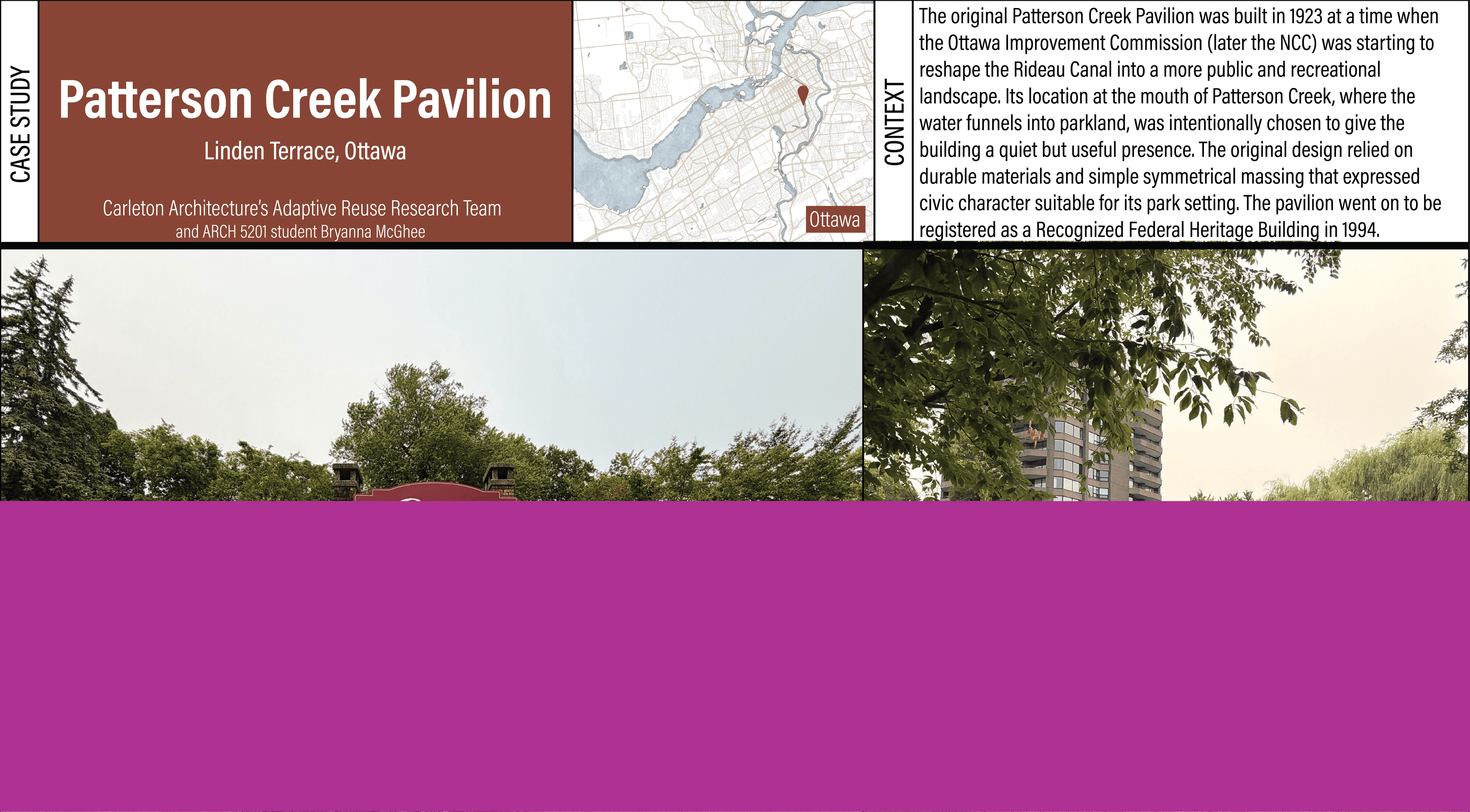 Réutilisation adaptative du Patterson Creek Bistro_Carleton_#32
Alors que le Canada continue de faire face à divers défis liés à son environnement bâti et à son cadre de vie, tels que le changement climatique, la dégradation du patrimoine culturel et les crises socio-économiques, il devient de plus en plus important de mettre en avant le potentiel de la réutilisation adaptative de nos infrastructures et bâtiments existants pour atténuer ces problèmes. L'équipe de recherche sur la réutilisation adaptative de Carleton Architecture, en collaboration avec les étudiants du cours ARCH 5201, a sélectionné une série d'études de cas afin de mieux comprendre les défis et les solutions que peut apporter la réutilisation adaptative. Ce document présente l'une des études de cas sélectionnées, le Patterson Creek Bistro à Ottawa, en Ontario. Il offre un aperçu concis du contexte du bâtiment, de ses caractéristiques distinctives et de son état actuel, ainsi que du processus mis en œuvre pour faciliter sa réutilisation adaptative.
